
Introduction
Technology is constantly changing the way people use their devices, and one of the most interesting developments in recent years is the rise of foldable devices and flexible displays. From smartphones that open into larger screens to laptops with innovative folding designs, manufacturers are exploring new ways to make technology more versatile, portable, and convenient.
For many years, smartphones and tablets followed a familiar design. Devices became thinner, screens grew larger, and cameras improved, but the basic shape remained almost unchanged. Foldable technology is challenging this traditional approach by allowing a device to change its physical form according to the user’s needs.
Imagine carrying a smartphone that fits comfortably in your pocket but opens into a tablet-sized display when you need more room to work, read, or watch videos. Alternatively, picture a laptop that folds into a compact device or a screen that can bend around a surface without requiring a rigid glass panel. These possibilities explain why flexible display technology has attracted attention from technology companies, designers, and consumers.
However, the appeal of foldable technology goes beyond appearance. It involves advances in display materials, hinge engineering, protective layers, battery design, and software optimization. Manufacturers must solve several technical challenges before flexible devices can deliver the durability and reliability people expect from everyday electronics.
As the technology develops, foldable devices could influence smartphones, computers, wearable electronics, automotive displays, and other connected products. This article explores why foldable devices are gaining interest, how flexible displays work, their major advantages, the challenges they face, and what their future may look like.
1. What Are Foldable Devices and Flexible Displays?
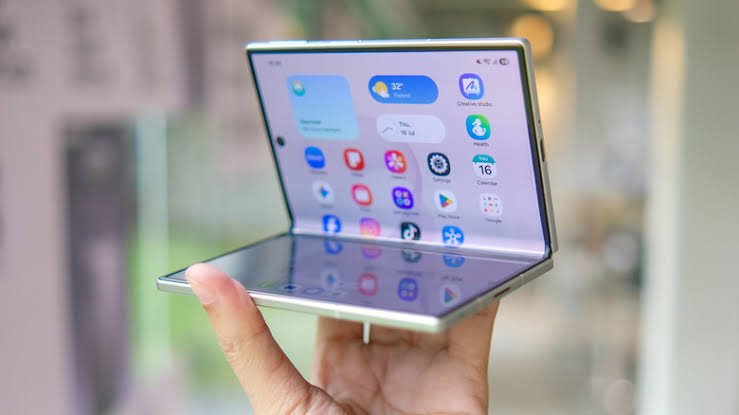
Foldable devices are electronic products designed to change shape through a folding mechanism. The most familiar examples are smartphones that fold in half or open to reveal a larger display.
Flexible displays are screens built with materials and structures that allow them to bend or curve more easily than conventional rigid displays. Depending on the design, a flexible display may fold, roll, curve around an edge, or fit into an unconventional shape.
Many modern foldable devices use organic light-emitting diode technology, commonly known as OLED. OLED displays produce light through organic materials within the display panel, allowing manufacturers to create relatively thin structures without the same backlighting arrangement used by many LCD screens.
Some OLED panels can be manufactured on flexible substrates, making them suitable for devices that need to bend. However, a flexible panel alone is not enough to create a reliable foldable product. The display also needs protective layers, electrical connections, mechanical support, and a hinge or other mechanism that controls movement.
Manufacturers must carefully coordinate these components so that the screen can fold repeatedly without developing serious damage.
It is also important to understand that not every curved screen is foldable. Some displays are designed only to curve along an edge, while others can repeatedly change shape. Rollable displays, which extend or retract rather than fold along a central crease, represent another approach to flexible electronics.
Although these technologies share similar principles, their engineering requirements and practical uses can differ considerably.
2. Why Foldable Smartphones Are Attracting Attention
Foldable smartphones have become one of the most visible applications of flexible display technology because they address a familiar problem: people want larger screens without carrying larger devices all the time.
Traditional smartphones must balance screen size with portability. A larger display can improve reading, video playback, gaming, and multitasking, but it can also make a phone harder to carry or operate with one hand.
Foldable designs offer another option.
A compact, book-style foldable phone can open into a larger screen suitable for reading documents, viewing presentations, or running multiple applications. A clamshell-style phone folds vertically, making the device smaller when closed while preserving a conventional smartphone experience when opened.
These designs appeal to different users. Someone who frequently works with documents may appreciate the additional screen space of a book-style device, while someone who values compactness may prefer a smaller folding phone.
Foldable devices also provide new ways to interact with technology. Certain models support flexible viewing angles, allowing users to position the device for video calls, photography, or watching content without holding it continuously.
Nevertheless, the benefits depend on the individual. A larger internal display may be useful for some tasks but unnecessary for people who mainly use their phones for messaging, calls, and basic browsing.
The growing interest in foldable smartphones reflects a broader desire for devices that adapt to different activities rather than forcing users to choose between portability and screen size.
3. The Technology Behind Flexible Displays
Creating a display that can bend without breaking requires a different engineering approach from building a traditional rigid screen.
Conventional displays often use rigid glass layers and supporting structures. Flexible displays instead rely on carefully selected materials that can tolerate bending while preserving image quality and electrical performance.
In many foldable OLED panels, a flexible substrate supports the display components. Thin protective layers help shield the panel from scratches, moisture, and everyday contact.
The challenge is that bending creates mechanical stress. Different layers within the display may stretch or compress by different amounts, potentially damaging delicate components if the structure is not designed properly.
Manufacturers must therefore consider the thickness of each layer, the position of sensitive components, and the minimum bending radius the display can safely tolerate.
Protective materials are particularly important. Some foldable devices use ultra-thin glass combined with additional protective layers. Other designs rely on specialized polymer materials or different layered structures.
The goal is to preserve flexibility without sacrificing visibility, touch responsiveness, or durability.
Display manufacturers also work to reduce the visibility of the crease that may appear where a screen folds. Hinge geometry, panel structure, and the way the display moves during folding can influence how noticeable the crease becomes.
These engineering improvements are helping flexible displays become more practical, although no design completely eliminates every trade-off.
4. Better Multitasking and Productivity
One reason foldable devices attract professionals and students is their potential to improve multitasking.
A conventional smartphone can run multiple applications, but the limited screen area can make certain tasks uncomfortable. Switching between documents, video calls, messages, and spreadsheets may require repeated movement between applications.
A foldable phone with a larger internal screen can provide more space for these activities.
For example, a student could read a digital textbook while taking notes in another application. A professional might review a presentation while checking messages or comparing two documents side by side.
Some foldable devices support split-screen layouts, floating windows, and taskbars designed to make use of the expanded display.
These features can help users complete selected tasks without carrying a separate tablet or laptop.
However, a larger screen does not automatically guarantee better productivity. Software must be designed to use the available space effectively, and not every application supports flexible layouts equally well.
Typing long documents may still be more comfortable on a laptop with a physical keyboard. Complex spreadsheets and specialized professional software may also require desktop-class features.
Foldable devices are therefore best understood as flexible tools that can support certain productivity tasks rather than complete replacements for every traditional computer.
As software support improves, their usefulness may extend to a wider range of work and learning activities.
5. Flexible Displays Are Expanding Beyond Smartphones
Although foldable phones receive much of the attention, flexible displays have potential applications across several other product categories.
Laptops are one important area of exploration. A folding or rollable screen could provide a larger workspace when needed while allowing the device to remain relatively compact during transportation.
Some experimental computer designs use a flexible panel that expands vertically or horizontally. Such designs may offer additional screen space for coding, document editing, research, and multitasking.
Tablets could also benefit from flexible display technology, particularly if manufacturers develop designs that combine a large viewing area with convenient storage.
Wearable technology represents another possibility. Flexible panels could be integrated into curved surfaces or unusual form factors, potentially creating new options for smart clothing and other body-worn devices. However, practical wearables must also address comfort, power consumption, durability, and safe contact with the body.
The automotive industry is exploring curved and integrated displays for dashboards and passenger information systems. Flexible display technology may allow screens to follow interior contours more naturally, although not every automotive application requires a display that physically folds.
Retail signage, portable entertainment equipment, and specialized industrial devices could also benefit from flexible panels.
The key advantage is design freedom. Manufacturers are no longer limited to the same flat, rigid screen arrangement for every product.
Still, many applications remain experimental or specialized. Commercial success will depend on whether flexible displays provide clear benefits over conventional screens at a reasonable cost.
6. Improved Portability Without Sacrificing Screen Size
Portability is one of the strongest arguments in favor of foldable devices.
People increasingly rely on digital tools while commuting, traveling, studying, and working away from a permanent desk. Carrying a phone, tablet, and laptop can be inconvenient, especially when space and weight are limited.
A foldable device can potentially combine features of two product categories within a single physical design.
For example, a foldable smartphone offers a familiar pocket-sized form when closed and a larger workspace when opened. A future folding computer might provide an expanded screen without requiring a large rigid display panel.
This flexibility could be particularly attractive to people who travel frequently or work in changing environments.
However, foldable devices do not always weigh less than conventional alternatives. Their hinges, reinforced frames, protective layers, and additional components can add weight and thickness.
A foldable phone may also have a smaller battery or different camera arrangement than a similarly priced traditional smartphone, depending on its design.
The real benefit is therefore not necessarily lower weight. It is the ability to change the device’s form when the user’s needs change.
For people who value versatility, this may be more important than achieving the smallest possible dimensions.
7. Design Innovation and the Changing User Experience
Foldable technology is encouraging manufacturers to rethink how people interact with screens.
Traditional devices generally maintain the same physical shape throughout their use. Foldable products can change their layout, screen size, and viewing position depending on how they are opened or positioned.
This creates opportunities for new user experiences.
A device might display notifications on a smaller outer screen while folded and reveal a more spacious interface when opened. A laptop could adjust its layout according to the amount of available display space. A flexible screen could potentially support different orientations without requiring a separate device.
Software plays a central role in making these experiences useful.
Applications need to adapt smoothly as the display changes size. Buttons, menus, text, and images should remain easy to use whether the device is folded, partially opened, or fully expanded.
Operating systems also need to manage transitions without losing the user’s progress or disrupting active tasks.
Developers may need to rethink how their applications use space, particularly when users can move between compact and expanded layouts.
These changes could encourage a more adaptable style of interface design in which software responds to the physical form of the device.
The long-term opportunity is not simply a screen that bends. It is a device that changes how it can be used without forcing the user to learn an entirely different system.
8. Durability: One of the Biggest Challenges
Despite their advantages, foldable devices face durability concerns that do not affect conventional rigid smartphones in quite the same way.
A foldable display must tolerate repeated bending, while the hinge needs to move smoothly over time. Protective layers must also resist scratches, pressure, dust, and other forms of everyday wear.
Each folding cycle creates mechanical stress, and repeated movement can eventually affect materials and components. The degree of wear depends on the design, manufacturing quality, and conditions of use.
The hinge is particularly important because it controls the screen’s movement and helps maintain alignment between the device’s two halves.
Dust and other particles can also create problems for some designs, although resistance varies between products. Consumers should not assume that every foldable device offers the same level of water or dust protection.
The display surface may also require more careful handling than conventional glass-covered screens, depending on the product’s construction.
Manufacturers are working to improve hinge designs, protective materials, and testing methods. However, laboratory durability claims do not necessarily represent every real-world situation.
Before buying a foldable device, consumers should review its warranty, repair options, durability specifications, and guidance for everyday care.
Improving reliability will be essential if foldable technology is to move from a premium niche into a more widely adopted category.
9. Battery Life and Power Efficiency
Battery performance is another important consideration for foldable devices.
A larger display can consume more energy, especially when it operates at high brightness or refresh rates. Foldable phones may also need to power multiple display areas, additional sensors, or more complex internal components.
Manufacturers must balance screen size with battery capacity, device thickness, and overall weight.
Some designs use two battery sections placed in different parts of the device to distribute power around the hinge. This arrangement can help accommodate the folding structure, but it adds complexity to the internal design.
Software optimization can also make a difference. Adaptive refresh rates, efficient processors, brightness controls, and intelligent background management can reduce unnecessary power consumption.
The type of task matters as well. Reading static text generally places different demands on a device than gaming, recording video, or running multiple applications.
Future improvements in battery chemistry and power-efficient display components may help flexible devices provide longer operating times without becoming thicker or heavier.
However, foldable devices do not automatically have worse battery life than conventional smartphones. Performance depends on the specific model, its battery capacity, its hardware, and how it is used.
Consumers should evaluate real-world battery performance rather than assuming that a larger screen always means shorter battery life.
10. The Cost of Foldable Technology
Price remains one of the most significant barriers to wider adoption.
Foldable devices often require specialized displays, precision hinges, reinforced frames, and more complicated assembly processes. These components can make manufacturing more expensive than producing a conventional smartphone or laptop.
Manufacturers also invest heavily in research, testing, and production techniques to ensure that flexible components perform reliably.
These costs can contribute to higher retail prices, particularly for products that combine large displays with advanced cameras, powerful processors, and premium materials.
For some consumers, the additional screen space and versatility justify the expense. Others may find that a conventional smartphone and a separate tablet provide similar practical benefits at a lower total cost.
Prices could become more accessible as production volumes increase, manufacturing processes improve, and more suppliers enter the market.
However, lower prices are not guaranteed. Advanced materials, repair costs, and the complexity of folding mechanisms may continue to influence the final cost.
Consumers should consider how often they would use the expanded display and whether it would replace another device they already own.
The value of foldable technology depends not only on its technical sophistication but also on whether its benefits justify its price for a particular user.
11. Are Foldable Devices Better Than Traditional Devices?
Foldable and conventional devices serve overlapping but different needs. Neither design is automatically the right choice for everyone.
Traditional smartphones often offer a familiar form factor, straightforward durability considerations, and a wide range of prices. Their rigid displays and simpler construction can make them attractive to people who prioritize reliability and value.
Foldable devices offer greater flexibility in screen size and physical form. They may be particularly useful for multitasking, reading, entertainment, and people who want a larger display without carrying a separate tablet.
However, foldable devices can cost more and may involve different compromises in thickness, weight, repairability, and battery capacity.
The best choice depends on how a person uses technology.
Someone who mainly sends messages, makes calls, takes occasional photographs, and browses the web may not benefit much from a foldable screen. A person who frequently reads documents, reviews presentations, or works with multiple applications may appreciate the extra space.
It is also worth considering the wider device ecosystem. Keyboard support, application compatibility, accessories, software updates, and repair availability can influence the experience as much as the display itself.
Rather than viewing foldable devices as automatic replacements for traditional products, it is more useful to see them as an additional category designed for particular needs.
12. The Role of Artificial Intelligence in Foldable Devices
Artificial intelligence could make foldable devices more useful by helping software respond to changing screen sizes and user activities.
For example, intelligent software may help organize applications according to the available display area, suggest convenient multitasking layouts, or adjust certain settings based on established user preferences.
AI-powered image processing can also improve photography, while on-device assistants can help with writing, searching, and organizing information.
The larger internal display of a foldable phone may provide more room for interacting with AI tools, reviewing generated content, or comparing information across applications.
In the future, a device could potentially adapt its interface to different situations, offering a compact layout while closed and a workspace-style arrangement when expanded.
However, these experiences do not require every foldable device to use advanced AI. Many useful layout changes can be achieved through conventional software design.
AI features also raise familiar concerns about privacy, accuracy, and energy consumption. Processing sensitive information locally may help in some situations, but users still need clear information about how data is handled.
The most effective combination of flexible hardware and AI will be one that improves everyday usability without adding unnecessary complexity.
13. Sustainability and Repairability
As foldable devices become more common, their environmental impact deserves attention.
Manufacturing electronic products requires materials, energy, and complex production processes. Devices that are difficult to repair or have short useful lifespans can contribute to electronic waste.
Foldable products may present particular repair challenges because their displays and hinge mechanisms are specialized components. A damaged flexible screen can be expensive to replace, depending on the model and availability of parts.
Manufacturers can improve sustainability by designing products for repair, providing replacement parts, extending software support, and offering reliable recycling programs.
Consumers can contribute by protecting their devices, using appropriate cases, and repairing products when doing so is practical.
Foldable technology could also have potential benefits if one device genuinely replaces two separate devices for a user. However, this advantage depends on how the product is used and its overall lifespan.
A product that combines multiple functions is not automatically more sustainable if it is difficult to repair or needs replacement sooner.
Long-term environmental performance depends on material sourcing, energy efficiency, durability, repairability, and responsible disposal.
As the market develops, sustainability may become an increasingly important factor in how consumers evaluate premium electronic devices.
14. What Does the Future Hold for Flexible Displays?
Flexible display technology is likely to continue evolving as manufacturers explore new materials, improved mechanical designs, and different product formats.
Foldable smartphones may become thinner and lighter, while improvements to hinges and protective layers could make them easier to use and maintain.
Rollable displays may also receive further attention because they can expand or retract without requiring a conventional folding crease. Such designs could allow a compact device to reveal a larger display when needed, although their mechanisms introduce their own engineering challenges.
Laptops and tablets may experiment with more adaptable screen arrangements, while wearable electronics could explore flexible surfaces that fit around curved shapes.
Flexible displays may also influence vehicle interiors, portable entertainment equipment, and specialized industrial applications.
However, not every concept shown in a demonstration will become a commercial product. Manufacturers must consider cost, durability, energy consumption, software compatibility, and whether consumers genuinely want the new design.
The future will likely include several different approaches rather than one universal flexible device. Conventional rigid screens will remain practical for many products, while foldable and rollable designs will serve situations where adaptability offers clear advantages.
Progress will depend on turning impressive prototypes into dependable products that people can afford and use comfortably every day.
Conclusion
Foldable devices and flexible displays are attracting attention because they challenge the traditional idea that electronic screens must have a fixed shape.
By combining flexible display panels with specialized hinges and adaptable software, manufacturers are creating devices that can offer a compact form when portability matters and a larger workspace when users need additional screen space.
Foldable smartphones demonstrate the most visible benefits, particularly for multitasking, reading, entertainment, and mobile productivity. Meanwhile, flexible displays are opening possibilities for laptops, tablets, wearable electronics, automotive systems, and other specialized applications.
Nevertheless, important challenges remain. Durability, battery performance, manufacturing costs, repairability, and software optimization all influence whether these devices provide lasting value.
For consumers, the decision to choose a foldable device should depend on practical needs rather than appearance alone. People who frequently use larger displays may benefit from the flexibility, while others may find conventional devices more affordable and convenient.
Looking ahead, improvements in materials, display engineering, and software could make flexible technology more capable and accessible. Some designs may become common, while others may remain specialized products.
Ultimately, the significance of foldable technology lies in its ability to make devices more adaptable to the way people live and work. If manufacturers can combine flexibility with reliability, affordability, and thoughtful design, foldable devices could become an important part of the next generation of personal electronics.