
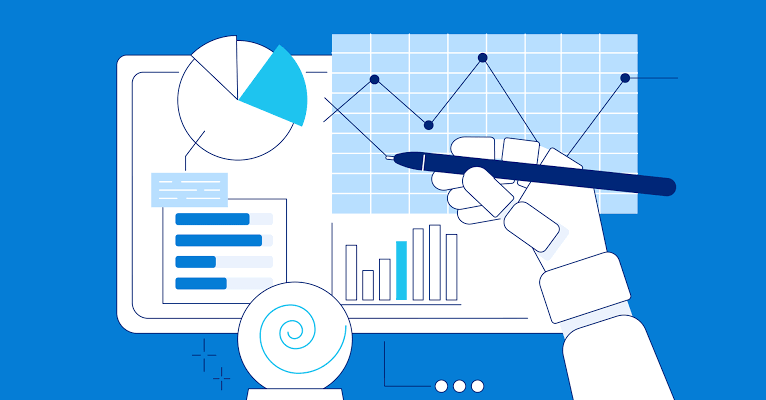
In today’s fast-moving business world, making decisions based only on guesswork is no longer enough. Companies have access to more data than ever before, but the real challenge is knowing how to turn that data into useful insights. This is where Predictive Analytics comes into play.
Predictive Analytics helps businesses examine historical and current data to identify patterns, understand trends, and estimate what may happen in the future. Instead of simply asking, “What happened?” businesses can use predictive methods to ask a more valuable question: “What is likely to happen next?”
From online shopping and banking to healthcare, marketing, manufacturing, and customer service, predictive analytics is changing the way organizations plan and operate. It allows companies to prepare for possible outcomes, reduce risks, improve customer experiences, and make more informed decisions.
What Is Predictive Analytics?
Predictive Analytics is a branch of data analysis that uses historical data, statistical techniques, machine learning, and mathematical models to forecast possible future outcomes.
For example, an online store may study a customer’s previous purchases, browsing behavior, and product searches to predict what that customer might want to buy next. A bank may analyze financial behavior to estimate the likelihood of a customer missing a payment. Similarly, a manufacturer can use equipment data to predict when a machine may require maintenance.
It is important to understand that predictive analytics does not tell us the future with complete certainty. Instead, it identifies patterns and probabilities based on available information. The quality of the prediction depends on factors such as the amount of data, data accuracy, the model being used, and changing real-world conditions.
How Does Predictive Analytics Work?
The process usually begins with collecting relevant data. This data can come from many sources, including customer records, websites, mobile applications, sales systems, social media, sensors, and business databases.
Once the data has been collected, it needs to be cleaned and organized. Poor-quality or incomplete data can lead to inaccurate predictions, so this step is extremely important.
After preparing the data, analysts use statistical models or machine learning algorithms to identify relationships and patterns. The model is trained using historical information and then tested to determine how accurately it can predict outcomes.
Finally, businesses use the results to support decision-making. For example, a company might identify customers who are likely to stop using its service and offer them personalized incentives before they leave.
Why Is Predictive Analytics Important?
One of the biggest advantages of predictive analytics is that it allows businesses to move from reactive decision-making to proactive planning.
Without predictive tools, a company may only respond after a problem occurs. With predictive insights, it can recognize warning signs earlier and take action before the situation becomes serious.
For example, a retailer can predict periods of high demand and increase inventory before products sell out. A hospital can analyze patient information to identify potential health risks. A marketing team can predict which customers are more likely to respond to a particular campaign.
This forward-looking approach can save time, reduce unnecessary costs, and create better business strategies.
Key Benefits of Predictive Analytics
Better Decision-Making
Businesses often have to make important decisions with limited time. Predictive analytics provides evidence-based insights that can help managers make more confident choices.
Instead of relying entirely on intuition, decision-makers can consider historical trends and predicted outcomes when evaluating different options.
Improved Customer Experience
Understanding customers is essential for building long-term relationships. Predictive models can analyze customer behavior and identify individual preferences.
Businesses can use these insights to recommend relevant products, personalize marketing messages, and provide timely support. When customers receive information that actually matches their needs, their overall experience can improve.
Reduced Business Risk
Every business faces risks, whether they involve financial losses, customer churn, fraud, equipment failure, or changing market conditions.
Predictive analytics can help organizations identify potential risks before they become major problems. For instance, financial institutions can use predictive models to detect unusual behavior and assess the probability of fraudulent transactions.
Increased Operational Efficiency
Predictive analytics can also make everyday operations more efficient. Companies can forecast demand, optimize staffing, manage inventory, and predict equipment maintenance requirements.
In manufacturing, predictive maintenance is particularly useful. Instead of waiting for a machine to break down, businesses can monitor performance data and identify signs of possible failure. This can reduce downtime and unexpected repair expenses.
More Effective Marketing
Marketing teams can use predictive analytics to understand which customers are most likely to purchase a product or respond to a campaign.
This allows businesses to focus their marketing budgets on audiences with a higher probability of conversion. It can also help marketers determine the best timing, channels, and offers for different customer groups.
Common Applications of Predictive Analytics
Predictive analytics is not limited to one industry. Its applications continue to grow as organizations collect more data.
Retail
Retailers use predictive models to forecast product demand, manage inventory, recommend products, and understand purchasing behavior. This helps them avoid both overstocking and stock shortages.
Healthcare
Healthcare organizations can use predictive analytics to identify potential health risks, estimate patient demand, and support clinical decision-making. It can also help hospitals manage resources more effectively.
Banking and Finance
Banks and financial institutions use predictive techniques for credit scoring, fraud detection, risk assessment, and customer analysis. By examining historical financial behavior, they can make more informed decisions.
Manufacturing
Manufacturers can predict equipment failures, forecast production requirements, and improve supply chain planning. Predictive maintenance can be especially valuable because unexpected equipment failure can be extremely expensive.
Human Resources
Companies can use predictive analytics to understand employee trends, identify possible turnover risks, and improve workforce planning. However, organizations need to be careful about fairness and bias when using employee-related data.
Predictive Analytics vs. Traditional Analytics
Traditional analytics generally focuses on understanding what has already happened. For example, a company may review last year’s sales figures to determine which products performed well.
Predictive analytics goes one step further. It uses historical information and other relevant data to estimate what could happen in the future.
There is also another related concept called prescriptive analytics. While predictive analytics asks, “What is likely to happen?”, prescriptive analytics focuses on, “What should we do about it?”
These approaches can work together. A business might predict that sales will decline in a particular region and then use prescriptive tools to determine which actions could potentially improve performance.
Challenges of Using Predictive Analytics
Although predictive analytics offers many benefits, it is not without challenges.
The first major challenge is data quality. If the information used to train a model is inaccurate, incomplete, outdated, or biased, the predictions may also be unreliable.
Another challenge is privacy. Businesses often work with sensitive customer or employee information, so they must handle data responsibly and follow applicable privacy requirements.
Model bias is another important concern. If historical data contains unfair patterns, a predictive model may reproduce or even amplify those patterns.
There is also the challenge of interpretation. Some advanced machine learning models can produce highly accurate predictions but may be difficult for people to understand. Businesses should therefore consider both performance and transparency when selecting predictive models.
The Future of Predictive Analytics
The future of predictive analytics is closely connected to the growth of artificial intelligence, machine learning, cloud computing, and real-time data processing.
As businesses gain access to faster and larger data sources, predictive systems are becoming more capable of responding to changing conditions. Instead of relying only on historical reports, organizations can increasingly analyze information in near real time.
Artificial intelligence is also making predictive systems more flexible. Modern models can process large and complex datasets that would be difficult to analyze manually.
However, technology alone will not guarantee better predictions. Businesses will still need reliable data, skilled professionals, appropriate models, and responsible data practices. Human judgment will remain important because predictions need to be interpreted within a real-world business context.
Frequently Asked Questions
1. What is Predictive Analytics in simple words?
Predictive Analytics is a method of using existing data, statistical techniques, and machine learning to estimate what is likely to happen in the future. Businesses use it to identify trends, predict customer behavior, manage risks, and improve decision-making.
2. What are the main benefits of Predictive Analytics?
The main benefits include better decision-making, improved customer experiences, reduced risks, lower operational costs, better resource planning, and more effective marketing. It can help businesses identify potential opportunities and problems before they occur.
3. Is Predictive Analytics the same as Artificial Intelligence?
No. Predictive analytics and artificial intelligence are related but not identical. Predictive analytics focuses on forecasting possible future outcomes using data and analytical models. Artificial intelligence is a broader field that includes technologies capable of performing tasks that traditionally require human intelligence.
4. Which industries use Predictive Analytics?
Many industries use predictive analytics, including retail, healthcare, banking, finance, manufacturing, transportation, insurance, marketing, and human resources. Any organization with useful historical data can potentially benefit from predictive techniques.
5. Can Predictive Analytics guarantee accurate predictions?
No. Predictive analytics cannot guarantee that a future event will happen exactly as predicted. Models work with probabilities and depend on the quality and relevance of the available data. Unexpected events and changes in market or customer behavior can also affect the accuracy of predictions.
Conclusion
Predictive Analytics has become an important tool for organizations that want to make smarter, more informed decisions. By studying historical and current data, businesses can identify patterns, estimate future outcomes, manage risks, improve customer experiences, and operate more efficiently.
From predicting customer behavior to preventing equipment failures, its practical applications are broad. However, organizations should remember that predictive analytics provides probabilities rather than guarantees. The accuracy of its results depends heavily on data quality, model selection, and responsible implementation.
When used properly, predictive analytics can give businesses a valuable advantage: the ability to prepare for what may come instead of simply reacting to what has already happened.