
Deep learning has become one of the most important technologies shaping the modern digital world. From voice assistants and recommendation systems to self-driving cars and medical image analysis, deep learning is quietly working behind many of the tools people use every day.
Although the term may sound highly technical, the basic idea is easier to understand than it first appears. Deep learning is a branch of artificial intelligence that allows computers to learn from large amounts of data and make decisions or predictions without being explicitly programmed for every individual task.
As more businesses collect data and demand smarter digital solutions, the importance of deep learning continues to grow. Companies use it to understand customers, automate repetitive processes, detect unusual patterns, improve products, and create more personalized experiences.
In this article, we will explore what deep learning is, how it works, its major applications, benefits, challenges, and what its future may look like.
What Is Deep Learning?
Deep learning is a specialized area of machine learning that uses artificial neural networks with multiple layers to process information and learn complex patterns.
Traditional computer programs generally follow instructions created by humans. Deep learning takes a different approach. Instead of giving a computer a detailed set of rules for every possible situation, developers provide a model with data. The model then learns patterns from that data and uses what it has learned to handle new information.
For example, imagine teaching a computer to recognize cats in photographs. Rather than manually programming every characteristic of a cat, a deep learning model can be trained using thousands or millions of labeled images. Over time, the model learns useful patterns related to shapes, colors, textures, and other visual features.
Once trained, the system can examine a new image and estimate whether it contains a cat.
This ability to learn complicated relationships from large datasets is one of the main reasons deep learning has become so powerful.
How Does Deep Learning Work?
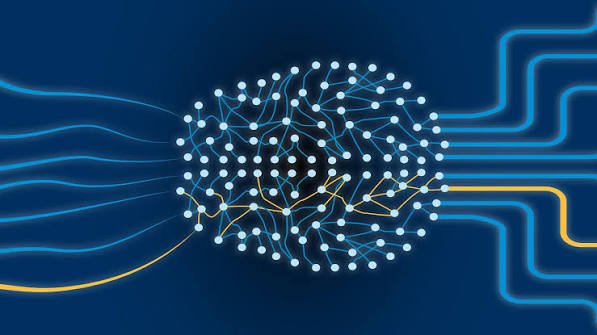
At the heart of deep learning are artificial neural networks. These networks are inspired loosely by the way biological brains process information, although they are mathematical systems rather than digital copies of human brains.
A neural network is made up of layers of interconnected artificial neurons.
The first layer receives input data. Hidden layers process that information, and the final layer produces an output. A deep neural network contains multiple hidden layers, which is where the word “deep” comes from.
During training, the network makes predictions and compares them with the expected results. When the prediction is incorrect, the model adjusts internal parameters called weights. This process is repeated many times until the model becomes better at its task.
One important technique used during this process is backpropagation. It helps the network determine which internal connections contributed to an error and how those connections should be adjusted.
Modern deep learning systems can contain millions, billions, or even more parameters. Training these models often requires powerful computer hardware and large datasets.
Deep Learning vs. Machine Learning
Deep learning and machine learning are closely related, but they are not exactly the same thing.
Machine learning is a broad field that allows computers to learn from data. It includes many different approaches, such as decision trees, linear regression, support vector machines, and neural networks.
Deep learning is a subset of machine learning that primarily relies on multilayer neural networks.
One major difference is how features are handled. In many traditional machine learning systems, humans may need to identify and prepare important features in the data. Deep learning models can often learn useful features automatically during training.
For example, in image recognition, a traditional machine learning workflow may require engineers to manually design features related to edges, shapes, or textures. A deep learning model can learn these representations directly from the images.
However, deep learning is not automatically better for every problem. It can require more data, computing power, training time, and expertise.
Major Applications of Deep Learning
Deep learning is already being used across many industries. Its ability to process complex information makes it particularly useful for tasks involving images, audio, language, and large datasets.
1. Image Recognition
One of the most successful applications of deep learning is computer vision.
Deep learning models can analyze images and identify objects, faces, patterns, and other visual information. This technology is used in security systems, photo applications, manufacturing, medical imaging, and many other areas.
For example, hospitals can use computer vision systems to assist professionals in analyzing medical scans. These systems may help identify patterns that require further examination.
2. Natural Language Processing
Deep learning has significantly changed the way computers understand and generate human language.
Modern language systems can translate text, summarize documents, answer questions, analyze sentiment, and generate written content. Chatbots and virtual assistants also rely heavily on machine learning and deep learning technologies.
The major advantage is that deep learning models can learn relationships between words and concepts from enormous collections of text.
3. Speech Recognition
Voice technology is another major application.
Deep learning systems can convert spoken language into text and identify words even when people have different accents, speaking speeds, or tones.
This technology supports voice assistants, automatic transcription, customer service systems, accessibility tools, and hands-free interfaces.
4. Recommendation Systems
Have you ever noticed that a streaming service recommends a movie you might enjoy or an online store suggests a product that interests you?
Deep learning can help power these recommendation systems.
By analyzing user behavior, preferences, previous interactions, and other information, models can identify patterns and predict what a person may want to watch, read, listen to, or purchase.
5. Autonomous Vehicles
Self-driving and advanced driver-assistance technologies also make extensive use of deep learning.
Vehicles can process information from cameras, sensors, radar, and other sources to understand their surroundings. Deep learning models can help identify roads, pedestrians, vehicles, traffic signs, and other objects.
Because driving involves complicated real-world situations, these systems require extensive training, testing, and safety validation.
Benefits of Deep Learning
Deep learning offers several important advantages when it is applied to suitable problems.
Better Pattern Recognition
Deep learning models can identify complex patterns that may be difficult to detect using traditional programming methods. This makes them useful for large and complicated datasets.
Automation
Organizations can use deep learning to automate tasks that previously required significant human effort. Examples include document classification, image analysis, fraud detection, and speech transcription.
Improved Predictions
When trained with high-quality data, deep learning models can make highly useful predictions. Businesses can use these predictions to understand demand, identify risks, or personalize services.
Handling Unstructured Data
Images, videos, audio recordings, and natural language are examples of unstructured or semi-structured data. Deep learning is particularly effective at extracting useful information from these types of data.
Continuous Improvement
Many deep learning systems can be retrained or improved as new data becomes available. This allows organizations to adapt models to changing requirements and environments.
Challenges of Deep Learning
Despite its impressive capabilities, deep learning also comes with limitations.
One of the biggest challenges is the need for large amounts of quality data. A model trained on incomplete, biased, or inaccurate data may produce unreliable results.
Computational requirements can also be significant. Training large neural networks may require specialized hardware, substantial electricity, and considerable financial resources.
Another challenge is interpretability. Some deep learning models are difficult to understand because their decisions can involve millions or billions of internal parameters. In sensitive areas such as healthcare, finance, or law, understanding why a system reached a particular conclusion can be extremely important.
Privacy is another concern. Organizations must be careful when collecting and using personal information to train AI systems.
Finally, deep learning models can sometimes reproduce biases found in their training data. Responsible development therefore requires careful testing, monitoring, and human oversight.
What Skills Are Needed to Learn Deep Learning?
People interested in deep learning can benefit from a combination of technical and mathematical skills.
A good understanding of programming is important, particularly Python. Knowledge of statistics, probability, linear algebra, and calculus can also make advanced concepts easier to understand.
Learners should become familiar with fundamental machine learning concepts before moving into more complex deep learning topics.
Practical experience is equally valuable. Building small projects can help learners understand how models are trained, evaluated, and improved.
Popular deep learning frameworks include TensorFlow and PyTorch. These tools make it easier to create, train, and experiment with neural networks.
The most effective learning approach is usually a combination of theory and practice. Instead of only watching tutorials, learners should work with real datasets and experiment with different models.
The Future of Deep Learning
The future of deep learning is likely to involve more capable, efficient, and specialized AI systems.
As hardware improves and algorithms become more efficient, models may become less expensive to train and operate. Researchers are also working on methods that allow models to learn more effectively from smaller amounts of data.
Deep learning is expected to remain important in fields such as healthcare, robotics, cybersecurity, scientific research, education, finance, and entertainment.
At the same time, responsible AI development will become increasingly important. Organizations will need to consider privacy, fairness, security, transparency, and the social impact of automated systems.
The goal should not simply be to create models that are more powerful. It should also be to create systems that are reliable, useful, understandable, and safe.
Frequently Asked Questions
1. What is deep learning in simple words?
Deep learning is a type of artificial intelligence that allows computers to learn complex patterns from large amounts of data. It uses neural networks with multiple layers to analyze information and produce predictions or decisions.
2. Is deep learning the same as AI?
No. Artificial intelligence is the broader field. Machine learning is a part of AI, and deep learning is a specialized part of machine learning that primarily uses multilayer neural networks.
3. Where is deep learning used?
Deep learning is used in many areas, including image recognition, speech recognition, language processing, recommendation systems, healthcare, cybersecurity, robotics, and autonomous driving technology.
4. Do I need programming skills to learn deep learning?
Programming skills are highly recommended. Python is especially popular in the field. A basic understanding of mathematics, statistics, and machine learning can also make learning deep learning much easier.
5. Why is deep learning important?
Deep learning is important because it enables computers to process complex data and perform tasks that are difficult to solve with traditional programming. It has become a major technology behind many modern AI applications.
Conclusion
Deep learning has transformed the capabilities of modern artificial intelligence. By using multilayer neural networks, computers can learn complicated patterns from enormous amounts of data and perform tasks that once seemed possible only for humans.
From image recognition and speech processing to recommendation engines and autonomous vehicles, its applications are already part of everyday life.
However, deep learning is not a magic solution. It requires appropriate data, computing resources, careful development, and responsible use. Understanding both its strengths and limitations is essential for anyone interested in artificial intelligence.
As technology continues to develop, deep learning will likely play an even larger role in the way people work, communicate, create, and solve problems. Learning its fundamentals today can provide a strong foundation for understanding the rapidly changing world of AI.