
Natural language is one of the most important ways humans connect, share ideas, express emotions, and understand the world around them. Every day, people use words and sentences without thinking deeply about the rules behind them. Whether someone is having a conversation with a friend, writing an email, reading a news article, or asking a question online, they are using natural language.
Unlike programming languages, which are designed to give computers precise instructions, natural language develops naturally within human communities. English, Urdu, Spanish, Arabic, Chinese, French, and thousands of other languages are examples of natural languages. They are shaped by culture, history, society, and everyday communication.
With the rapid development of artificial intelligence, natural language has become even more important. Modern technologies can now analyze, understand, translate, and generate human language in ways that were once considered impossible. This has changed how people interact with computers, search for information, and use digital services.
What Is Natural Language?
Natural language refers to the languages that humans naturally develop and use to communicate with one another. It includes spoken, written, and sometimes signed forms of communication.
For example, when someone says, “Could you help me find the nearest restaurant?” they are using natural language. The sentence contains meaning, context, and an intention. A human listener can usually understand what the person wants without needing a detailed explanation.
Natural language is flexible. People can communicate the same idea in many different ways. Someone might say, “I am tired,” while another person says, “I’m exhausted” or “I need some rest.” Although the wording is different, the basic meaning may be similar.
This flexibility makes human language powerful, but it also makes it difficult for computers to understand perfectly.
How Does Natural Language Work?
Natural language works through a combination of vocabulary, grammar, context, meaning, and social understanding. People do not simply interpret individual words. They consider the complete sentence and the situation in which the words are being used.
Consider the sentence, “The bank is closed.”
The word “bank” could refer to a financial institution or the side of a river. In most situations, people understand the intended meaning from the surrounding context. Computers, however, need sophisticated language-processing techniques to make similar judgments.
Grammar also plays an important role. The order of words can change meaning. For example, “The dog chased the cat” does not mean the same thing as “The cat chased the dog.” Although the same words are used, their arrangement changes the relationship between the subjects and objects.
Tone can also affect interpretation. A sentence such as “That’s great” might express genuine happiness, sarcasm, or disappointment depending on the situation and the speaker’s tone.
Natural Language and Artificial Intelligence
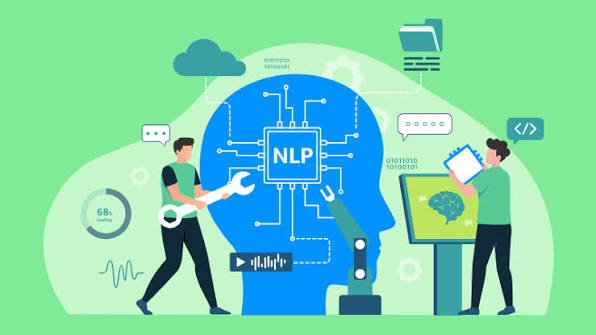
The connection between natural language and artificial intelligence has become increasingly important. A major field known as Natural Language Processing, or NLP, focuses on helping computers work with human language.
NLP allows machines to process large amounts of text and speech. It is used in applications such as search engines, translation tools, virtual assistants, chatbots, speech recognition, grammar checkers, and recommendation systems.
For example, when a person types a question into a search engine, the system needs to understand what the user is looking for. It does not simply match individual words. Modern systems can analyze the meaning and intent behind a query to provide more relevant results.
Similarly, voice assistants can interpret spoken requests and respond appropriately. This requires several steps, including recognizing speech, identifying words, understanding the user’s intent, and generating a useful response.
Why Is Natural Language Important?
Natural language is important because it makes communication accessible and flexible. People should not need to learn complex technical commands just to interact with technology.
Imagine having to memorize a special code every time you wanted to search for information online. That would make technology difficult for many people. Natural language allows users to communicate with digital systems in a familiar way.
It also plays a major role in education, business, healthcare, customer service, and research. Organizations can analyze written feedback, emails, reviews, reports, and other documents to understand what people are saying.
For businesses, language analysis can help identify customer opinions and common complaints. In education, language technologies can support students with writing, translation, and learning activities. In healthcare, language-based systems can help organize and analyze large collections of information.
Examples of Natural Language in Everyday Life
People interact with natural language technology more often than they may realize.
Search engines are a common example. Users can enter questions such as “How can I improve my sleep?” instead of using a complicated set of commands. The search system attempts to understand the intent and provide useful information.
Email applications also use language technology. Spam filters analyze messages to determine whether they are likely to be unwanted. Some email services can suggest replies based on the content of a conversation.
Translation applications are another important example. They process words and sentences in one language and produce corresponding text in another. Although translation systems are not always perfect, modern tools can handle many everyday communication tasks effectively.
Customer service chatbots also rely on natural language. Instead of selecting an option from a long menu, customers can describe their problem in their own words.
Challenges of Understanding Human Language
Despite major technological progress, understanding natural language remains challenging.
One reason is ambiguity. A single word or sentence can have multiple meanings. Context is often necessary to determine the intended interpretation.
Idioms can also create problems. When someone says, “It’s raining cats and dogs,” they are not talking about animals falling from the sky. They are using an expression that means it is raining heavily.
Sarcasm and humor are even more difficult. People can often recognize these through tone, facial expressions, previous conversations, or cultural knowledge. A computer may interpret the literal words without understanding the intended message.
Languages also change over time. New words, slang, abbreviations, and expressions appear constantly. Social media has accelerated this process, making language more dynamic than ever.
The Future of Natural Language
The future of natural language technology is likely to involve even more natural interactions between humans and machines. Instead of learning how software works, users will increasingly be able to communicate with technology through ordinary conversation.
Artificial intelligence systems are already becoming better at understanding context, maintaining conversations, summarizing information, translating languages, and generating written content. Future systems may become even better at recognizing subtle differences in tone, intention, and meaning.
However, better technology does not mean that human communication will become less important. Language is deeply connected to culture, creativity, identity, and relationships. Technology can process language, but human experiences give language its richness and emotional meaning.
As AI continues to develop, understanding how natural language works will remain essential. It will influence how people search for information, communicate with machines, create content, and interact with digital services.
Frequently Asked Questions About Natural Language
1. What does natural language mean?
Natural language refers to languages that humans naturally develop and use for communication. English, Spanish, Arabic, Chinese, and Urdu are examples. It can include spoken and written communication as well as other human language forms.
2. What is an example of natural language?
A simple conversation is an example of natural language. For instance, “What time does the store open?” is a natural-language question because it is expressed in the ordinary language people use to communicate.
3. Is natural language the same as human language?
Yes, in most contexts, natural language refers to human languages that develop naturally within communities. It is different from artificial or programming languages, which are deliberately created for specific purposes.
4. Why is natural language important in AI?
Natural language allows people to interact with AI systems using ordinary words instead of complicated commands. It helps AI applications understand questions, analyze text, process speech, and generate responses.
5. What is Natural Language Processing?
Natural Language Processing, commonly called NLP, is a field of artificial intelligence and computer science that focuses on enabling computers to process, analyze, understand, and generate human language.
6. Can computers fully understand natural language?
Computers have become very capable at processing language, but complete human-level understanding remains difficult. Context, sarcasm, cultural references, emotions, and ambiguous expressions can still create challenges.
7. Where is natural language used?
Natural language technology is used in search engines, virtual assistants, translation software, chatbots, email applications, customer support systems, content tools, and many other digital services.
8. What is the future of natural language technology?
The technology is expected to become more capable of understanding context, conversation, intent, and different communication styles. This could make interactions between people and computers increasingly natural and accessible.
Conclusion
Natural language is much more than a collection of words and grammatical rules. It is a complex system that allows people to express thoughts, emotions, questions, opinions, and experiences.
Its importance has grown significantly with the development of artificial intelligence and language-based technologies. From search engines and translation tools to chatbots and voice assistants, natural language now plays a central role in modern technology.
Although machines have made impressive progress, human language remains difficult to understand because it depends on context, culture, tone, emotion, and experience. As technology continues to improve, the goal is not simply to make computers recognize words but to help them understand what people actually mean.
For this reason, natural language will continue to be an important part of both human communication and technological innovation.