
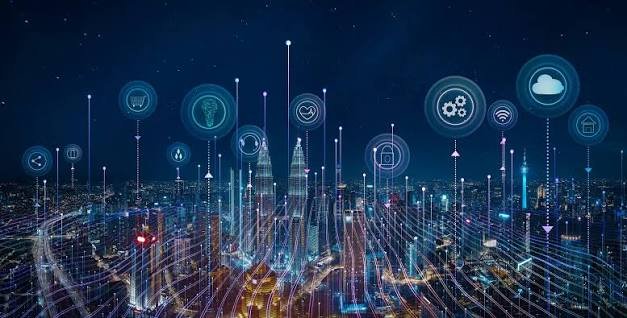
Technology has never moved at a slow pace, but the changes happening today feel different. New ideas are moving from research laboratories into everyday life faster than ever. Artificial intelligence is becoming part of ordinary software, robots are learning to perform useful tasks, electric vehicles are becoming more practical, and smart devices are changing how people work and communicate.
This rapidly changing world is often described with one simple phrase: Future Tech.
Future Tech refers to emerging technologies and innovative ideas that could significantly change our lives in the coming years. Some of these technologies are already available, while others are still being developed or tested. From AI and robotics to quantum computing and advanced healthcare, the future is likely to bring technologies that once seemed impossible.
But what will this future actually look like? More importantly, how will it affect ordinary people?
What Is Future Tech?
Future Tech is a broad term used to describe technologies that are expected to influence the future. It includes inventions, systems, and digital solutions that can improve the way people live, work, travel, communicate, and solve problems.
Artificial intelligence is one of the biggest examples. AI systems can already analyze information, generate content, recognize images, understand language, and assist people with complicated tasks. As these systems become more capable, they could become deeply integrated into education, business, medicine, transportation, and entertainment.
Other examples include autonomous vehicles, wearable technology, renewable energy systems, biotechnology, virtual reality, augmented reality, and quantum computing.
The important thing to remember is that Future Tech is not limited to one industry. It is a combination of many technologies developing at the same time.
Artificial Intelligence Will Remain a Major Force
Artificial intelligence is likely to remain at the center of technological development for years to come.
Modern AI can perform tasks that previously required significant human effort. Businesses use AI to analyze data, communicate with customers, automate repetitive work, and identify patterns. Individuals use AI tools for writing, research, learning, planning, and creative projects.
The next stage of AI development could make digital assistants much more useful. Instead of simply answering questions, future AI systems may be able to understand long-term goals, organize complicated tasks, and work across multiple applications.
For example, imagine asking an AI assistant to help plan a business project. Rather than providing a simple list of suggestions, it could potentially research information, create a project plan, monitor progress, identify problems, and recommend changes.
However, this development also creates important questions about privacy, employment, misinformation, and responsible AI use. The future of AI will depend not only on what the technology can do but also on how society chooses to use it.
Robotics Could Change Everyday Work
Robots have existed for decades, particularly in manufacturing. Future robotics, however, could be much more flexible and intelligent.
Advances in AI, sensors, computer vision, and mechanical engineering are helping robots operate in increasingly complex environments. This could lead to robots being used in warehouses, hospitals, farms, construction sites, homes, and other areas.
Some robots may handle dangerous jobs that could put humans at risk. Others could assist older adults or people with disabilities. In healthcare, robotic systems may help doctors perform precise procedures or assist patients during rehabilitation.
Humanoid robots are also attracting significant attention. While widespread household robots are still a developing idea, improvements in machine learning and hardware could make general-purpose robots more capable over time.
The goal is not necessarily to replace every human worker. In many situations, robots may instead work alongside people and handle repetitive, physically demanding, or dangerous tasks.
Quantum Computing Could Transform Problem Solving
Traditional computers have become incredibly powerful, but some problems remain extremely difficult to solve. Quantum computing approaches computation in a fundamentally different way.
Quantum computers use quantum mechanical principles to process certain types of problems. They are still in an early stage, and practical large-scale quantum computing remains challenging. Nevertheless, researchers are exploring potential applications in areas such as materials science, chemistry, optimization, cryptography, and drug discovery.
If quantum computers eventually become reliable and scalable, they could help researchers simulate complex systems that are difficult for conventional computers to model.
This does not mean that quantum computers will replace ordinary laptops and smartphones. Instead, they are more likely to become specialized machines designed for particular classes of problems.
Healthcare May Become More Personalized
Healthcare is another field where Future Tech could make a major difference.
Advances in biotechnology, medical imaging, wearable sensors, genetic analysis, and AI could help doctors understand patients in greater detail. Instead of relying primarily on general treatment approaches, healthcare may increasingly move toward personalized care.
Wearable devices can already monitor information such as heart rate, activity, and sleep. Future systems may be able to collect and interpret even more health-related data.
AI could also assist doctors by analyzing medical images, identifying patterns, and helping organize large amounts of clinical information. Meanwhile, biotechnology research could lead to new approaches for treating diseases.
The biggest challenge will be making sure these technologies are accurate, secure, affordable, and available to the people who need them.
Smart Homes Will Become Smarter
The smart home is another area where technology is likely to become more natural and useful.
Today, people can control lights, thermostats, security cameras, speakers, appliances, and other devices through apps or voice commands. Future smart homes could go further by automatically adapting to the habits and preferences of residents.
A home might learn when people normally wake up, adjust the temperature before they arrive, manage energy consumption, and identify unusual activity.
The focus could shift from controlling individual devices to creating an environment where different systems work together.
Energy efficiency will also become increasingly important. Smart systems could help homeowners reduce unnecessary electricity use and better coordinate appliances with renewable energy sources.
Electric and Autonomous Transportation
Transportation is undergoing a major technological transformation.
Electric vehicles are becoming increasingly common, while battery technology continues to develop. Improvements in charging infrastructure, battery efficiency, and vehicle design could make electric transportation more convenient.
Autonomous driving is another important area of Future Tech. Fully self-driving vehicles remain technically and legally challenging, but driver-assistance systems are already helping with tasks such as lane keeping, braking, parking, and highway driving.
If autonomous transportation becomes reliable and widely adopted, it could change how people think about car ownership, public transportation, delivery services, and logistics.
Future transportation may also include advanced drones, electric aircraft, smart traffic systems, and new forms of urban mobility.
Virtual and Augmented Reality
Digital experiences are becoming increasingly immersive.
Virtual reality can place users inside computer-generated environments, while augmented reality adds digital information to the physical world. Both technologies have potential beyond gaming.
Students could use immersive environments to explore historical locations or conduct virtual experiments. Engineers could visualize complex designs before building physical prototypes. Employees could receive realistic training without being exposed to real-world risks.
Augmented reality could also make everyday tasks easier. Imagine looking at a machine and seeing instructions appear directly over the components that need attention.
As hardware becomes lighter and software becomes more sophisticated, immersive technology may become a more common part of work, education, entertainment, and communication.
Renewable Energy and Sustainable Technology
The future of technology is not only about faster computers and smarter software. It is also about solving environmental challenges.
Solar and wind power are expanding, while researchers continue to explore better batteries, energy storage systems, smart electrical grids, and other technologies.
Future energy systems could become more decentralized. Homes, businesses, and communities may generate more of their own electricity while using intelligent systems to manage consumption and storage.
Technological progress alone will not solve climate and environmental problems, but innovation can provide important tools for reducing emissions, improving efficiency, and using resources more responsibly.
The Human Side of Future Tech
It is easy to focus on futuristic gadgets and forget the human side of technological progress.
Every new technology creates opportunities, but it can also introduce new risks. Automation may change job requirements. AI can produce inaccurate information. Connected devices can create privacy concerns. Advanced technologies may become inaccessible if their costs remain too high.
Education will therefore become increasingly important.
People may not need to become professional programmers or engineers, but understanding how new technologies work and how to use them responsibly will become valuable. Critical thinking, creativity, communication, and adaptability may become just as important as technical skills.
Companies and governments will also have an important role in creating rules and standards that encourage innovation while protecting people.
What Can We Expect From Future Tech?
Predicting technology is difficult. Some ideas that seem revolutionary today may fail to become mainstream, while technologies that receive little attention could eventually become extremely important.
The most realistic expectation is that technology will continue becoming more connected, intelligent, automated, and personalized.
Computers will likely become more capable. AI will become more integrated into everyday tools. Robots may perform a wider range of physical tasks. Healthcare technology may become more personalized. Transportation may become cleaner and increasingly automated.
At the same time, society will need to make careful decisions about privacy, security, fairness, employment, and access.
The future will not be shaped by technology alone. It will be shaped by the choices people make about technology.
Frequently Asked Questions About Future Tech
1. What does Future Tech mean?
Future Tech refers to emerging and developing technologies that are expected to influence the way people live and work in the future. It includes areas such as artificial intelligence, robotics, quantum computing, biotechnology, smart devices, renewable energy, and autonomous transportation.
2. What is the most important Future Tech today?
Artificial intelligence is one of the most influential areas of Future Tech today. AI is already being used across many industries, including healthcare, education, finance, entertainment, manufacturing, and customer service.
3. Will Future Tech replace human jobs?
Some jobs and tasks may become automated, particularly repetitive tasks. However, technology can also create new careers and change existing jobs. Human creativity, judgment, communication, and problem-solving are likely to remain valuable.
4. How will AI affect the future?
AI could make many tasks faster and easier by helping people analyze information, automate work, create content, and make decisions. Its impact will depend on how accurately, safely, and responsibly it is developed and used.
5. Are robots going to become common in homes?
Robots are becoming more capable, but fully general-purpose household robots are still developing. Future advances in AI, sensors, batteries, and robotics could make domestic robots more practical for tasks such as cleaning, assistance, and household management.
6. What role will Future Tech play in healthcare?
Future technology could help healthcare become more personalized and efficient. AI-assisted diagnosis, wearable monitoring, advanced medical imaging, biotechnology, and personalized treatments could improve how diseases are detected and treated.
7. Is quantum computing part of Future Tech?
Yes. Quantum computing is considered an important emerging technology because it could potentially solve certain complex problems that are difficult for traditional computers. However, the technology is still developing and faces significant technical challenges.
8. How can people prepare for Future Tech?
People can prepare by developing digital skills, staying curious about technological developments, learning how AI and other technologies work, and improving skills such as critical thinking, creativity, communication, and adaptability. Continuous learning will be increasingly valuable as technology changes.
Final Thoughts
Future Tech represents more than futuristic inventions. It represents the continuous effort to use science and innovation to solve problems and improve human life.
Artificial intelligence, robotics, quantum computing, biotechnology, immersive experiences, renewable energy, and smart transportation are all developing at different speeds. Some will become essential parts of everyday life, while others may take decades to mature.
What makes the future exciting is the uncertainty. We cannot know exactly which inventions will define the next decade, but we can already see the direction in which technology is moving.
The most important question is not simply what technology will be capable of doing. The bigger question is how humans will use those capabilities.
If innovation is combined with responsible development, education, security, and thoughtful decision-making, Future Tech could help create a world that is more efficient, connected, sustainable, and accessible.