
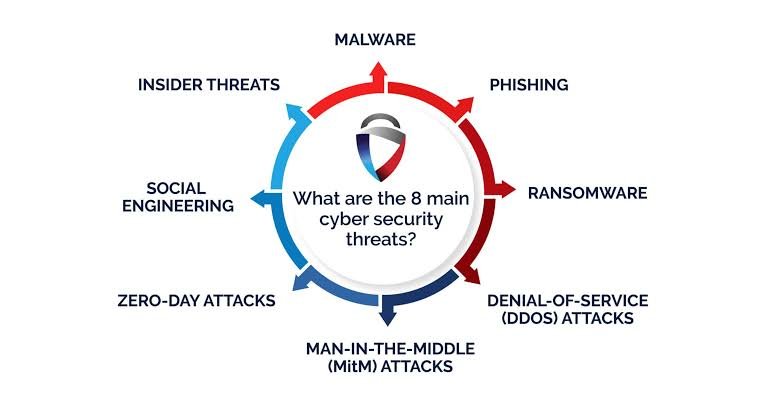
The internet has become an essential part of everyday life. We use it to communicate with friends, shop online, manage bank accounts, work remotely, store personal photos, and access important information. While the digital world offers countless benefits, it also creates opportunities for criminals to steal information, damage systems, and disrupt businesses. These dangers are commonly known as cyber threats.
Cyber threats can affect anyone, from individual internet users to large corporations and government organizations. Some attacks are designed to steal passwords and financial information, while others can shut down entire computer networks. Understanding how these threats work is one of the best ways to protect yourself.
What Are Cyber Threats?
Cyber threats are malicious activities or attempts to damage, access, manipulate, or steal data from computers, networks, websites, and digital devices. These threats can come from individual hackers, organized criminal groups, dishonest employees, or even state-sponsored organizations.
Not every cyber threat looks the same. Some attacks rely on sophisticated software, while others depend on simple human mistakes. For example, a person may receive an email that looks like it came from their bank. The message might ask them to click a link and verify their account. If they enter their login information on a fake website, criminals can use those details to access the real account.
Because technology continues to change, cyber threats are also becoming more varied. New attack methods appear regularly, making cybersecurity an ongoing responsibility rather than something that can be handled once and forgotten.
Common Types of Cyber Threats
There are many different forms of cyber threats. Knowing the most common ones can help people recognize suspicious activity before it causes serious problems.
1. Phishing
Phishing is one of the most common cyber threats. It usually involves fake emails, text messages, or websites designed to trick people into revealing sensitive information.
A phishing message may pretend to come from a bank, delivery company, social media platform, employer, or government agency. The attacker may create a sense of urgency by claiming that an account will be closed unless the victim takes immediate action.
The safest approach is to avoid clicking suspicious links and independently visit the official website or application instead.
2. Malware
Malware is short for malicious software. It includes programs created to harm devices, steal information, monitor activity, or provide unauthorized access to a system.
Viruses, worms, spyware, and trojans are all examples of malware. Malware can enter a device through malicious downloads, infected attachments, unsafe websites, or compromised software.
Keeping operating systems and applications updated can reduce the risk of malware infections.
3. Ransomware
Ransomware is a particularly damaging type of cyber threat. It can encrypt files on a computer or network and prevent the owner from accessing them.
Attackers then demand money in exchange for supposedly restoring access. Businesses are often targeted because losing access to important files and systems can interrupt their operations.
Regular backups are an important defense against ransomware. Backups should ideally be stored separately from the main system so attackers cannot easily encrypt or delete them.
4. Password Attacks
Weak or reused passwords can make accounts easier to compromise. Cybercriminals may use automated tools to guess passwords or attempt login combinations stolen from previous data breaches.
Using a unique, strong password for every important account can make a significant difference. A password manager can also help users create and securely store complicated passwords without requiring them to memorize every one.
Multi-factor authentication provides another layer of protection by requiring an additional verification method during login.
5. Social Engineering
Social engineering focuses on manipulating people rather than directly attacking technology.
An attacker might pretend to be a company employee, technical support representative, friend, or manager. They may use trust, fear, curiosity, or urgency to convince someone to share confidential information or perform a particular action.
This is why cybersecurity is not only about installing security software. People also need to learn how to recognize unusual requests and verify someone’s identity before sharing sensitive information.
6. DDoS Attacks
Distributed Denial-of-Service, commonly called DDoS, attacks attempt to overwhelm a website, server, or online service with a huge amount of traffic.
When successful, the targeted service may become extremely slow or completely unavailable. Businesses that depend heavily on online services can suffer financial losses and reputational damage when their websites are inaccessible.
Organizations often use specialized network protection and traffic-monitoring systems to reduce the impact of DDoS attacks.
Why Are Cyber Threats Increasing?
The growing dependence on technology is one major reason cyber threats continue to be a concern.
People now connect smartphones, laptops, smart TVs, cameras, watches, and other devices to the internet. Businesses also rely on cloud services, remote work platforms, online payment systems, and connected networks.
Every connected device or online account can potentially become a target if it is not properly protected.
Another factor is the increasing value of personal and business data. Information such as passwords, credit card details, customer records, business documents, and login credentials can be valuable to criminals.
Cybercriminals also benefit from automation. Instead of targeting one person at a time, attackers can send thousands or even millions of malicious messages using automated systems.
How Cyber Threats Affect Individuals
Cyber threats can have serious consequences for ordinary internet users.
A successful attack could result in stolen money, compromised social media accounts, identity theft, loss of personal files, or exposure of private conversations and photographs.
For example, if someone gains access to an email account, they may be able to reset passwords for other services connected to that email address. This can turn one compromised account into a much larger security problem.
People should therefore avoid assuming that they are too unimportant to become a target. Automated attacks do not always distinguish between high-profile individuals and ordinary users.
How Cyber Threats Affect Businesses
Businesses face even greater risks because they often store large amounts of sensitive information.
A successful cyberattack can expose customer data, interrupt operations, damage company systems, and create expensive recovery costs. Depending on the circumstances, organizations may also face legal or regulatory consequences.
Small businesses can be particularly vulnerable because they may have limited cybersecurity budgets and fewer dedicated security professionals.
A strong cybersecurity strategy should therefore be considered an important business investment rather than an unnecessary expense.
Warning Signs of a Cyber Threat
Recognizing warning signs early can help prevent an attack from becoming more serious.
Some common signs include unexpected password-reset emails, unfamiliar login notifications, strange messages from friends or colleagues, unexplained computer slowdowns, unknown applications, and unusual financial transactions.
People should also be careful when a message creates extreme urgency. Phrases such as “act immediately,” “your account will be deleted,” or “send your information now” can be warning signs of a scam.
When something seems unusual, it is better to pause and verify the information through a trusted source.
How to Protect Yourself From Cyber Threats
Good cybersecurity does not have to be complicated. A few consistent habits can significantly improve online safety.
First, use strong and unique passwords. Avoid using the same password across multiple accounts.
Second, enable multi-factor authentication whenever it is available. Even if someone obtains your password, an additional verification step can make unauthorized access more difficult.
Third, keep your operating system, browser, applications, and security tools updated. Software updates often include fixes for known security weaknesses.
Fourth, be cautious with emails, messages, attachments, and links. If a message looks suspicious, verify the sender before taking action.
Fifth, back up important files regularly. Backups can be extremely valuable if a device is lost, damaged, or affected by ransomware.
Finally, learn about common scams and security techniques. Cybersecurity awareness is one of the strongest defenses because many attacks depend on human error.
The Importance of Cybersecurity Awareness
Technology alone cannot eliminate cyber threats. Even the most advanced security system can be weakened if someone accidentally gives an attacker access.
Cybersecurity awareness teaches people how to identify suspicious activity and make safer decisions online.
Businesses can improve awareness by providing regular employee training. Individuals can do the same by learning about phishing, password security, privacy settings, and safe browsing habits.
The goal is not to become a cybersecurity expert. Instead, it is about developing simple habits that make it harder for attackers to succeed.
What to Do After a Cyberattack
If you believe an account or device has been compromised, acting quickly is important.
Change the affected password immediately, preferably from a trusted device. If the same password was used elsewhere, change those passwords as well.
Check account activity for unfamiliar logins or transactions. Contact your bank or financial institution if you notice suspicious financial activity.
For businesses, the incident should be reported to the appropriate internal security team or professional. Important evidence should be preserved because it may help determine how the attack happened.
Most importantly, do not ignore the incident. A compromised account can remain vulnerable if the underlying problem is not addressed.
The Future of Cybersecurity
As technology advances, cyber threats will continue to evolve. Artificial intelligence, cloud computing, smart devices, and increasingly connected systems will create new opportunities as well as new security challenges.
Organizations and individuals will need to remain flexible and continuously improve their security practices.
The future of cybersecurity is not simply about building stronger technology. It also involves educating users, improving security policies, monitoring systems, and responding quickly when something goes wrong.
Being completely protected from every possible cyber threat may not be realistic, but reducing risk is achievable. Small security improvements can make a meaningful difference over time.
Frequently Asked Questions About Cyber Threats
1. What are cyber threats?
Cyber threats are malicious attempts to access, damage, manipulate, disrupt, or steal information from digital devices, computer systems, websites, or networks. They can target individuals, businesses, and government organizations.
2. What is the most common type of cyber threat?
Phishing is among the most common cyber threats. It uses fake emails, messages, websites, or other communications to trick people into providing passwords, financial information, or other sensitive details.
3. Can cyber threats affect ordinary people?
Yes. Cybercriminals can target anyone who uses the internet. Individuals may experience stolen passwords, hacked accounts, financial fraud, identity theft, or loss of personal files.
4. How can I protect myself from cyber threats?
Use strong and unique passwords, enable multi-factor authentication, keep software updated, avoid suspicious links and attachments, maintain backups, and learn how to recognize common online scams.
5. What is the difference between malware and ransomware?
Malware is a broad term for malicious software designed to harm systems or steal information. Ransomware is a specific type of malware that typically blocks access to files or systems and demands payment from the victim.
6. Why is cybersecurity awareness important?
Many cyberattacks depend on human mistakes, such as clicking malicious links or sharing passwords. Cybersecurity awareness helps people recognize suspicious activity and make safer decisions.
7. What should I do if I think I have been hacked?
Change compromised passwords, enable multi-factor authentication, review account activity, check for unauthorized transactions, and contact the relevant service provider. If the incident involves a business system, report it to the organization’s security team immediately.
8. Will cyber threats become more common in the future?
Cyber threats are likely to continue evolving as people and businesses become more dependent on digital technology. New devices, services, and technologies can create new opportunities for attackers, making ongoing cybersecurity awareness important.
Conclusion
Cyber threats are an ongoing part of the modern digital world. From phishing and malware to ransomware, password attacks, and social engineering, cybercriminals use many different methods to target individuals and organizations.
The good news is that many attacks can be prevented or limited through simple security practices. Strong passwords, multi-factor authentication, software updates, regular backups, careful browsing, and cybersecurity awareness can provide valuable protection.
Online safety is not a one-time task. It requires continuous attention as technology and attack methods change. By understanding common cyber threats and developing responsible digital habits, individuals and businesses can reduce their risk and use technology with greater confidence.