
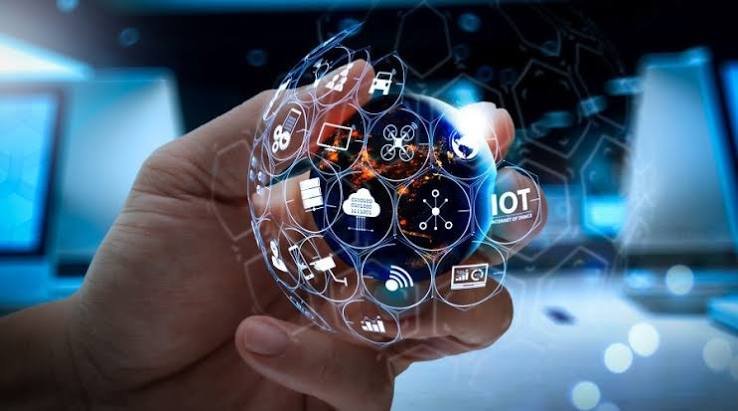
Technology is changing faster than ever before. Every year, new ideas, tools, and digital solutions enter the market and change the way people work, communicate, shop, learn, and live. Some technologies improve existing systems, while others completely transform the way we think about the future. This growing wave of innovation is often described as Emerging Tech.
Emerging technologies are not limited to one particular industry. They can be found in healthcare, finance, education, transportation, manufacturing, entertainment, cybersecurity, and almost every other part of modern life. Artificial intelligence, robotics, blockchain, quantum computing, extended reality, and advanced biotechnology are just a few examples of technologies that are gaining attention around the world.
Understanding these technologies is becoming increasingly important because they are likely to influence both businesses and individuals in the coming years. While some innovations are still in their early stages, others are already being used in practical applications.
What Is Emerging Tech?
Emerging Tech refers to new or rapidly developing technologies that have the potential to create significant changes in society, business, or everyday life. These technologies may be completely new inventions or advanced versions of existing technologies.
Unlike traditional technology, emerging technology is often associated with experimentation and rapid development. Some innovations succeed and become widely adopted, while others may disappear because they are too expensive, difficult to use, or unable to solve real-world problems.
The important point is that emerging technologies have the potential to create new opportunities. Businesses can use them to improve efficiency, reduce costs, develop new products, and provide better experiences for customers.
Artificial Intelligence and Machine Learning
Artificial intelligence is one of the most influential areas of Emerging Tech today. AI systems can analyze information, recognize patterns, generate content, understand language, and assist people with complex tasks.
Machine learning, a major part of AI, allows computer systems to learn from data and improve their performance over time. Companies are already using these technologies for customer support, fraud detection, personalized recommendations, data analysis, marketing, and automation.
Generative AI has also introduced new possibilities. Instead of simply analyzing information, generative systems can create text, images, audio, video, software code, and other types of content.
However, AI also brings challenges. Questions surrounding privacy, misinformation, job changes, copyright, and responsible use are becoming increasingly important. As AI continues to develop, organizations will need to focus not only on what the technology can do but also on how it should be used.
Robotics and Automation
Robotics is another major area of Emerging Tech. Modern robots are becoming more capable, flexible, and intelligent. They are no longer limited to simple repetitive tasks in factories.
Robots can now assist in warehouses, hospitals, laboratories, agriculture, and other environments. Automated systems can move products, inspect equipment, perform precise operations, and support workers in physically demanding jobs.
The growth of robotics does not necessarily mean that humans will disappear from the workplace. In many situations, robots are designed to work alongside people. By handling repetitive or dangerous tasks, they can allow employees to focus on decision-making, creativity, communication, and other activities that require human judgment.
Quantum Computing
Quantum computing is one of the most advanced and potentially transformative areas of Emerging Tech. Traditional computers process information using bits that represent either zero or one. Quantum computers use quantum bits, or qubits, which operate according to principles of quantum mechanics.
The technology is still developing, but researchers believe quantum computers could eventually solve certain complex problems much faster than conventional machines.
Potential applications include drug discovery, materials science, financial modeling, logistics, optimization, and cryptography. However, building reliable quantum computers is extremely difficult. Qubits can be sensitive to environmental disturbances, and researchers are still working on making quantum systems stable and practical.
For now, quantum computing remains an emerging field, but its long-term possibilities make it an important technology to watch.
Extended Reality and the Digital World
Extended reality includes technologies such as virtual reality, augmented reality, and mixed reality. These tools can combine digital information with physical surroundings or create completely immersive virtual environments.
Virtual reality can provide simulated experiences for gaming, training, education, and professional development. Augmented reality, meanwhile, can place digital information over the user’s view of the real world.
Businesses are exploring extended reality for product demonstrations, employee training, remote collaboration, design, and customer experiences. As hardware becomes more comfortable and affordable, these technologies could become more common.
The biggest challenge is creating experiences that are genuinely useful rather than simply impressive. Technology succeeds when it solves a problem or provides meaningful value to users.
Blockchain and Decentralized Technology
Blockchain became widely known through cryptocurrencies, but its potential applications extend beyond digital currencies. A blockchain is a distributed digital record that can store transactions or other information in a way that is difficult to alter without detection.
Organizations are exploring blockchain for supply chain management, digital identity, financial services, authentication, and record keeping.
One of the most interesting ideas associated with blockchain is decentralization. Instead of relying entirely on a single organization to control a database, information can be shared across a network.
Despite its potential, blockchain still faces challenges involving scalability, energy consumption in some systems, regulation, usability, and security. Its future will depend on whether businesses can develop practical applications that provide clear advantages over traditional systems.
Biotechnology and Healthcare Innovation
Emerging Tech is also changing healthcare. Advances in biotechnology, genetic research, medical devices, and data analysis are opening new possibilities for diagnosis and treatment.
Researchers are studying ways to identify diseases earlier, develop personalized treatments, and improve medical research. AI can help analyze large amounts of medical data, while advanced laboratory technologies can support the development of new therapies.
Wearable devices are another example. Smart watches and other health-focused devices can collect information such as heart rate, activity levels, and sleep patterns. While these devices do not replace professional medical care, they can provide useful information about general health and fitness.
The combination of technology and healthcare could lead to more personalized and efficient medical services in the future.
Why Emerging Tech Matters to Businesses
Businesses cannot afford to ignore technological change. Companies that understand Emerging Tech can identify new opportunities before competitors and adapt to changing customer expectations.
For example, automation can reduce repetitive work, AI can help employees analyze information, and advanced analytics can support better business decisions. New technologies can also create entirely new products and services.
However, adopting every new technology is not a smart strategy. Businesses should first understand the problem they want to solve. A technology should be adopted because it provides measurable value, not simply because it is popular.
Companies also need to consider employee training, cybersecurity, privacy, implementation costs, and long-term maintenance.
Challenges of Emerging Technologies
Although emerging technologies offer exciting opportunities, they also create challenges. One major concern is cybersecurity. As organizations become more dependent on digital systems, cyberattacks can have increasingly serious consequences.
Privacy is another important issue. Many modern technologies rely on large amounts of data. Companies must handle this information responsibly and comply with applicable laws and regulations.
There are also concerns about employment. Automation and AI may change the types of skills employers need. Some jobs may decline, while new roles may emerge. Education and professional training will therefore play an important role in helping workers adapt.
Ethics is equally important. Developers and organizations need to consider how technology affects people, communities, and the environment.
The Future of Emerging Tech
The future of Emerging Tech will likely involve greater interaction between different technologies. AI may work alongside robotics, blockchain could support digital identity systems, and biotechnology may benefit from advanced computing and data analysis.
This convergence could produce innovations that are difficult to imagine today. At the same time, not every emerging technology will become mainstream. Some will remain specialized, while others may be replaced by better solutions.
The most successful technologies will probably be those that are useful, accessible, secure, and capable of solving real-world problems.
For individuals, staying informed is one of the best ways to prepare for this future. People do not need to become experts in every new technology. Learning the basics, developing digital skills, and remaining open to change can make it easier to adapt.
Frequently Asked Questions About Emerging Tech
1. What does Emerging Tech mean?
Emerging Tech refers to new or rapidly developing technologies that have the potential to significantly influence industries, businesses, and everyday life. Examples include artificial intelligence, quantum computing, robotics, blockchain, and biotechnology.
2. Why is Emerging Tech important?
Emerging Tech is important because it can improve efficiency, create new products and services, solve complex problems, and change how people interact with businesses and technology.
3. What are some examples of Emerging Tech?
Common examples include artificial intelligence, machine learning, robotics, quantum computing, virtual reality, augmented reality, blockchain, biotechnology, advanced automation, and Internet of Things technologies.
4. How does Emerging Tech affect businesses?
It can help businesses automate repetitive tasks, analyze data, improve customer experiences, reduce operational costs, and discover new opportunities. However, successful adoption requires planning, investment, and employee training.
5. Will Emerging Tech replace human workers?
Some technologies may automate certain tasks, but that does not necessarily mean all human jobs will disappear. Technology can also create new roles and increase demand for skills involving creativity, critical thinking, communication, and technology management.
6. Is artificial intelligence part of Emerging Tech?
Yes. Artificial intelligence and machine learning are among the most important areas of Emerging Tech. They are being used for tasks such as data analysis, automation, content creation, customer service, and decision support.
7. What are the risks of Emerging Tech?
Potential risks include cybersecurity threats, privacy concerns, misinformation, job displacement, ethical problems, regulatory challenges, and the misuse of powerful technologies. Responsible development and appropriate safeguards can help reduce these risks.
8. How can people prepare for the future of Emerging Tech?
People can prepare by developing digital skills, following important technology trends, learning how AI and automation work, improving critical-thinking abilities, and staying willing to learn new skills as technology changes.
Conclusion
Emerging Tech is transforming the modern world at an impressive pace. From artificial intelligence and robotics to quantum computing, extended reality, blockchain, and biotechnology, new technologies are creating opportunities across almost every industry.
At the same time, innovation must be balanced with responsibility. Privacy, security, ethics, employment, and accessibility should remain part of the conversation as technology develops.
The future of technology is not simply about creating more advanced machines or software. It is about using innovation to solve meaningful problems and improve people’s lives. Organizations and individuals that learn how to adapt to technological change will be better prepared for the opportunities and challenges ahead.